About

THE AUTHORS

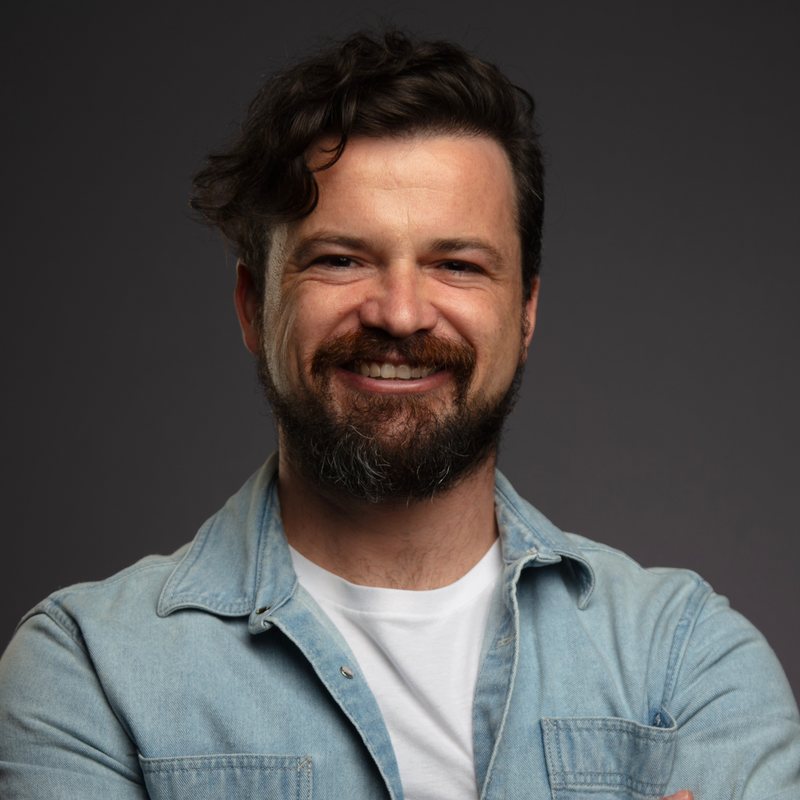
Marc Owen Jones

Marc Owen Jones

Associate Professor of Media Analytics
Northwestern University in Qatar

Marc Owen Jones is an Associate Professor in Residence of Media Analytics at Northwestern University in Qatar, where he lectures and researches on disinformation, digital authoritarianism, and political repression. His recent work has focused on the quantitative and qualitative documentation and analysis of social media disinformation and harassment campaigns in the Middle East. He was previously an Associate Professor of Middle East Studies at Hamad bin Khalifa University in Qatar, and is a non-resident fellow at Democracy for the Arab World Now and the Middle East Council on Global Affairs, and a member of the Committee on Academic Freedom at the Middle East Studies Association.

He completed his PhD in Government and International Affairs at Durham University in 2016. Among his publications are two monographs, Political Repression in Bahrain (Cambridge University Press, 2020) and Digital Authoritarianism in the Middle East: Deception, Disinformation and Social Media (Hurst / Oxford University Press, 2022). His PhD thesis won the 2016 Best Thesis award from the Association for Gulf and Arabian Peninsula Studies, and in 2021 he received the UK Alumni Professional Achievement award from the British Council in Qatar.

In addition to his academic publications, Jones has written for the Washington Post, CNN, Time, the Independent and the New Statesman; his work features frequently in the New York Times, the Wall Street Journal and the Guardian. He has a regular column on Al Jazeera English and appears regularly on BBC, LBC, CBC News and others. Jones grew up in Bahrain and Saudi Arabia, and has worked and studied in Sudan, Syria, Germany and the United Kingdom.
Sohan Dsouza

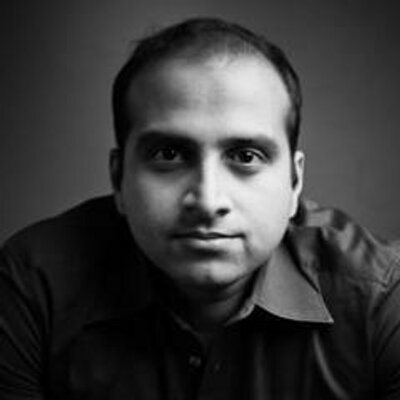
Sohan Dsouza

Computational Social Scientist
and OSINT Practitioner

Sohan Dsouza is a London-based consultant in computational social science and open-source intelligence; a Visiting Researcher with the Max Planck Institute for Human Development in Berlin; and a Digital Forensic Research Lab “Digital Sherlock”. He is interested in the intersection between disinformation and political polarisation; in infrastructures facilitating influence operations and other inauthentic digital presences; in AI-powered deception; and their implications for platform design and policy.

He holds an SM in Media Arts and Sciences from the Massachusetts Institute of Technology; an MSc in Informatics from the University of Edinburgh School of Informatics associate programme at the British University in Dubai; an MBA and PGDM in IT Management from the SP Jain Centre of Management and SP Jain Institute of Management and Research; and a BS in Computer Information Systems from the Illinois Institute of Technology. His research background includes studies of crowdsourcing, strategic cooperation, incentive mechanisms, social mobilisation, AI ethics, and computer-mediated negotiation.

He has worked in computational social science research at the MIT Media Lab and at the Masdar Institute of Science and Technology, on projects such as The Moral Machine, The Disobedience Award, and the US State Department Tag Challenge. His work has been published in Nature, PNAS, Transport and IEEE Intelligent Systems, and has been covered by major media outlets including the New York Times, BBC, RTÉ, NPR, Guardian, New Scientist, Scientific American and Associated Press.

The original report

The first Qatar Plot investigation was published in July 2024 at theqatarplotreport, where the Phase 1 report, the archived advertisements and the media coverage remain. Meta's Q2 2024 Adversarial Threat Report confirmed its findings the following month. This site continues that work through the operation's second and third phases.